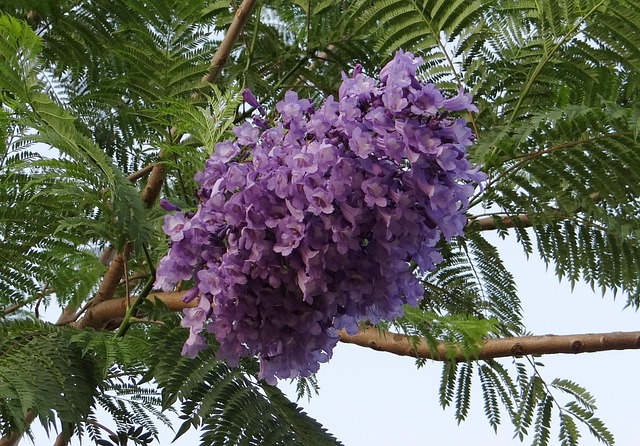
Trees with purple blooms bring an air of mystery, elegance, and serenity to gardens, streetscapes, and wild forests alike. The rich hue of purple—often associated with royalty, creativity, and spirituality—adds a unique aesthetic to any environment.
From the famous Jacaranda tree with its lavender-hued canopies to lesser-known but equally stunning species like the Chaste Tree, these flowering trees not only provide visual delight but also support local ecosystems—making them a beautiful and practical choice for eco-friendly gardening enthusiasts.
In this article, we’ll explore several remarkable trees known for their purple blooms, highlighting their features, ideal growing conditions, and landscaping value.
1. Jacaranda (Jacaranda mimosifolia)
The Jacaranda is perhaps the most iconic of all trees with purple flowers. Native to South America, especially Brazil and Argentina, this deciduous tree is widely planted in tropical and subtropical regions around the world.
- Bloom Color: Lavender to light purple
- Bloom Time: Late spring to early summer
- Height: 25–50 feet (7–15 meters)
- Features: Fern-like foliage, spreading canopy, trumpet-shaped flowers
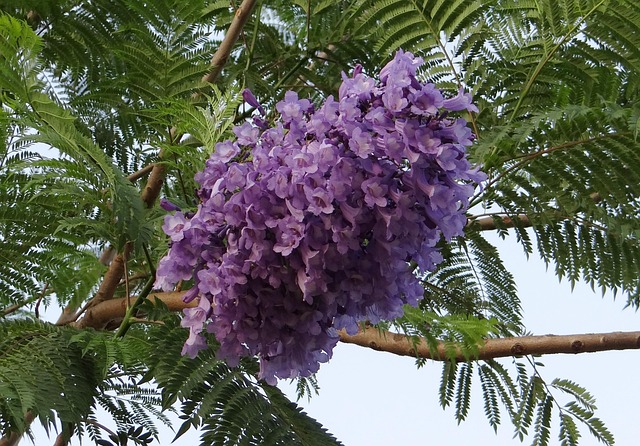
Jacarandas are prized for their breathtaking flower displays that often blanket the entire tree and surrounding ground with purple petals. In cities like Pretoria (South Africa), Sydney (Australia), and parts of Southern California, streets lined with Jacarandas are popular tourist attractions during blooming season. The tree thrives in well-drained soils and full sunlight, though it can be frost-sensitive when young.
2. Purple Robe Locust (Robinia pseudoacacia ‘Purple Robe’)
A cultivar of the Black Locust, the Purple Robe Locust is a hardy, fast-growing tree known for its showy, fragrant flowers.
- Bloom Color: Deep reddish-purple
- Bloom Time: Late spring
- Height: 30–50 feet (9–15 meters)
- Features: Compound leaves, pea-like flowers, thorny branches
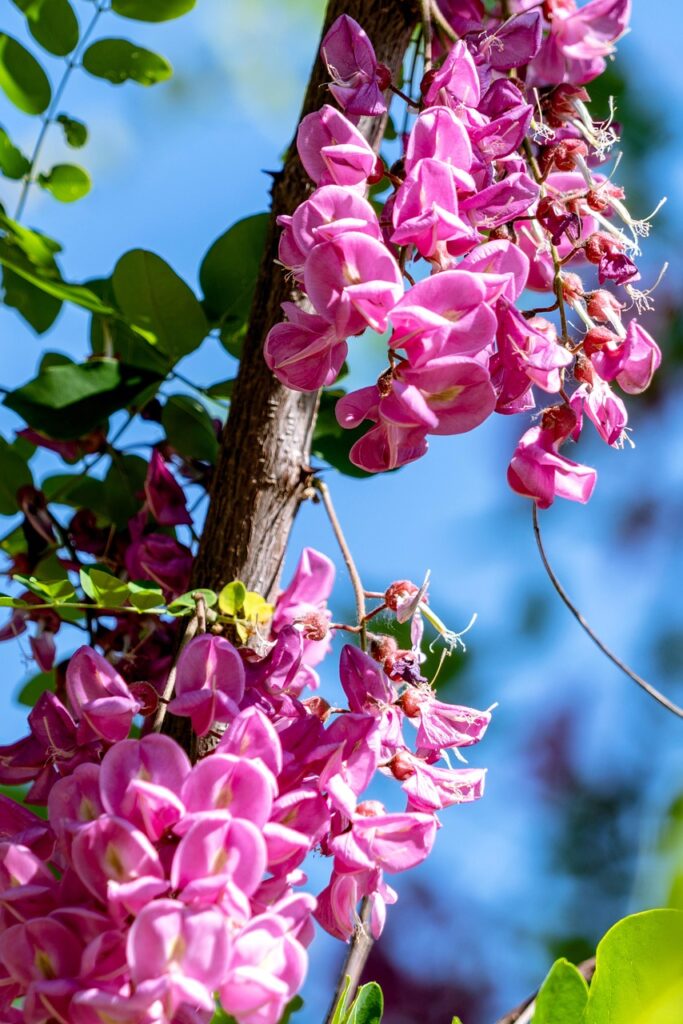
This tree not only adds color to the landscape but also improves soil fertility through nitrogen fixation. It’s drought-tolerant and suitable for urban settings, but it can spread aggressively if not managed. Its striking flower clusters resemble wisteria and are attractive to bees and hummingbirds.
3. Chaste Tree (Vitex agnus-castus)
Though technically more of a large shrub or small tree, the Chaste Tree is often pruned into tree form and is a favorite for ornamental gardens in warm climates.
- Bloom Color: Lavender to violet-purple
- Bloom Time: Summer through early fall
- Height: 10–20 feet (3–6 meters)
- Features: Aromatic gray-green leaves, spiked flower clusters
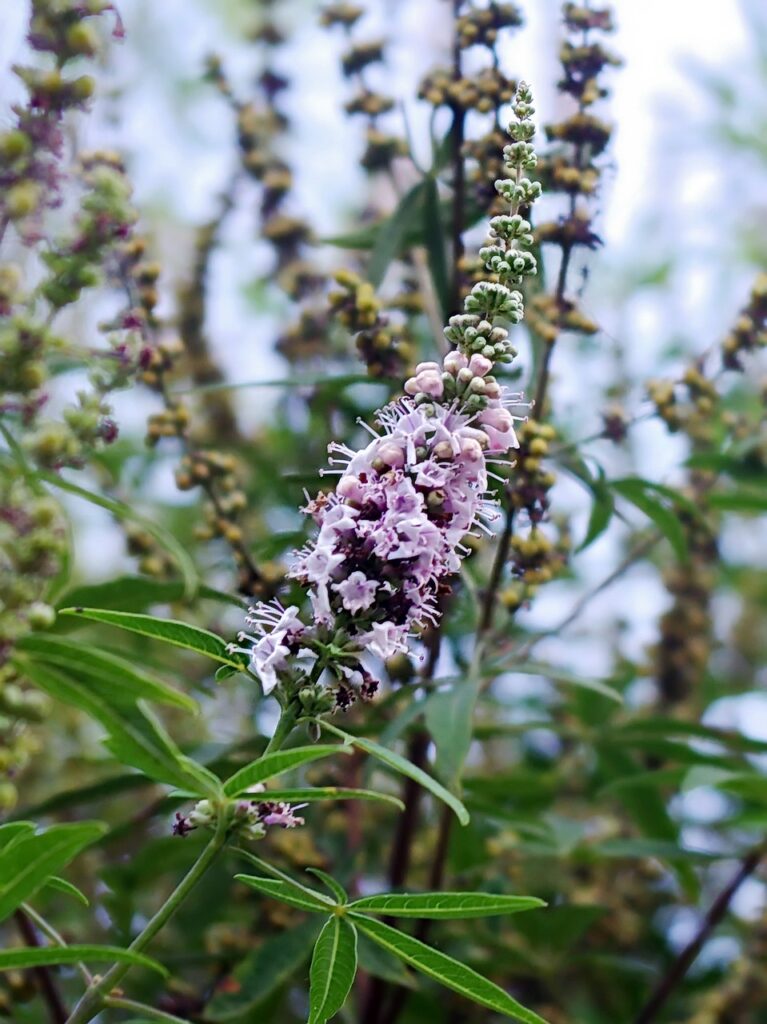
Native to the Mediterranean region, the Chaste Tree is both drought-tolerant and deer-resistant. It thrives in well-drained soil and full sun. The flowers are rich in nectar, attracting butterflies, bees, and other pollinators. In addition to its aesthetic appeal, the plant has been historically used for medicinal purposes.
4. Texas Mountain Laurel (Dermatophyllum secundiflorum)
Native to the southwestern United States and northern Mexico, the Texas Mountain Laurel is a small evergreen tree known for its stunning, grape-scented blossoms.
- Bloom Color: Deep purple to violet
- Bloom Time: Early spring
- Height: 10–20 feet (3–6 meters)
- Features: Glossy evergreen leaves, dense flower clusters, strong fragrance
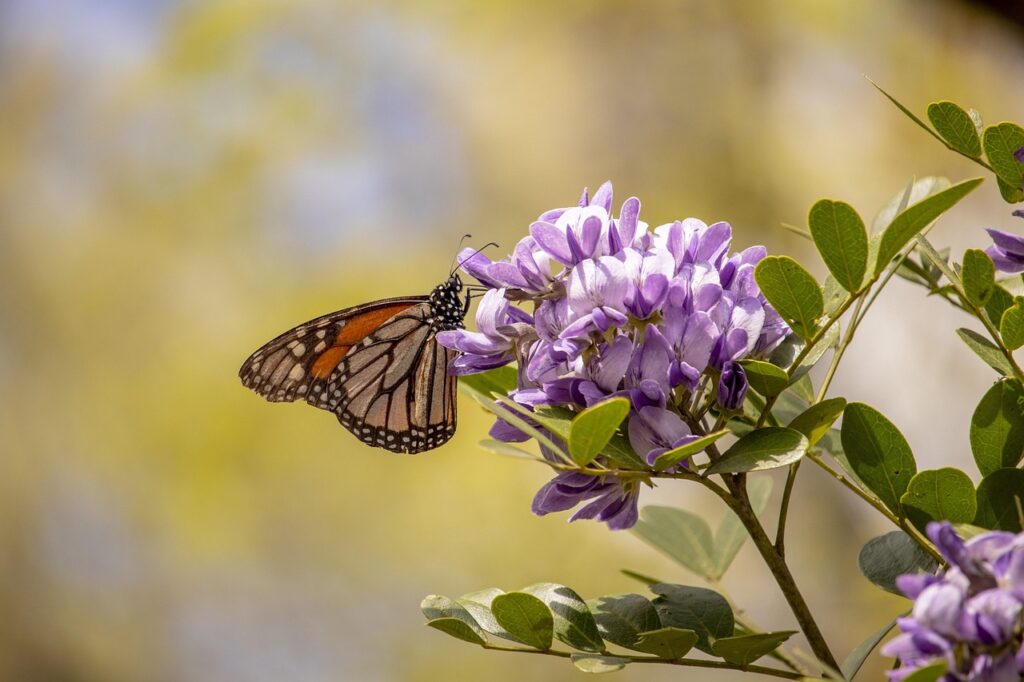
This tree is ideal for xeriscaping as it requires little water once established. The flowers resemble clusters of wisteria and emit a scent reminiscent of grape candy. Be cautious, though—the seeds and pods are toxic if ingested.
5. Crape Myrtle (Lagerstroemia indica – Purple Cultivars)
Crape Myrtles come in many colors, including several stunning purple varieties such as ‘Royalty,’ ‘Catawba,’ and ‘Twilight.’
- Bloom Color: Light lavender to deep purple
- Bloom Time: Mid to late summer
- Height: 10–30 feet (3–9 meters), depending on cultivar
- Features: Smooth bark, multi-stemmed trunk, crinkled petal texture
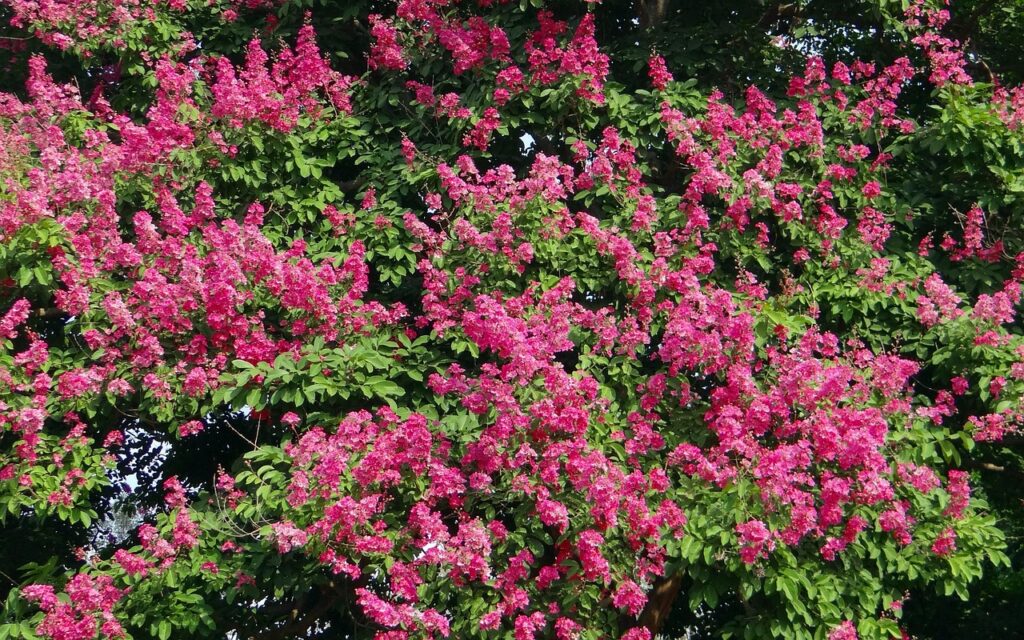
These trees are heat- and drought-tolerant, thriving in USDA zones 7–10. Their long bloom period and resistance to pests make them excellent choices for urban and residential landscapes. They can be grown as small trees or large shrubs.
6. Empress Tree (Paulownia tomentosa)
The Empress Tree, also known as the Princess Tree, is a fast-growing deciduous species native to China.
- Bloom Color: Pale violet to bluish-purple
- Bloom Time: Early spring before the leaves emerge
- Height: 30–50 feet (9–15 meters)
- Features: Large heart-shaped leaves, tubular flowers, rapid growth
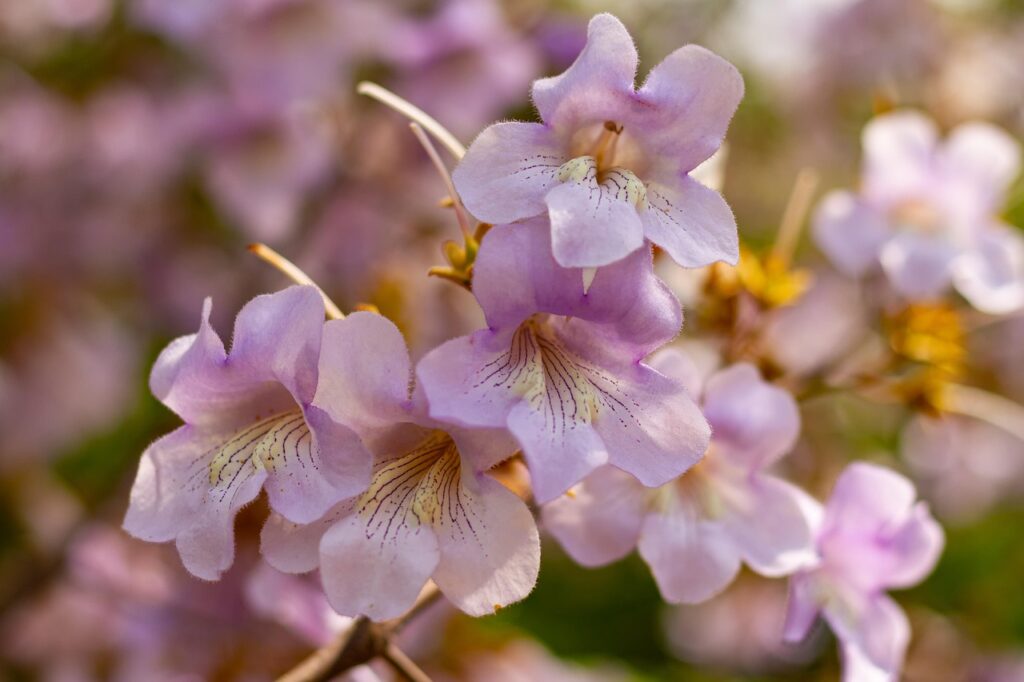
Though admired for its beauty, the Empress Tree is considered invasive in some regions due to its aggressive growth and ability to colonize disturbed areas. Still, in controlled settings, it offers a magnificent spring display with its orchid-like flowers.
Conclusion
Trees with purple blooms provide an enchanting alternative to more common flowering trees. Their beauty can range from subtle pastel lavenders to rich, royal purples, creating a stunning contrast with green foliage or urban surroundings.
When selecting a purple-flowering tree for your landscape, consider local climate, soil type, and maintenance needs to ensure the best fit. Whether you’re aiming to attract pollinators, make a bold color statement, or simply enjoy the seasonal beauty, there’s a purple-blooming tree to suit every taste and region—all while supporting the principles of eco-friendly gardening.