Trees with pink leaves are rare, eye-catching additions to any landscape, offering bursts of color that feel almost magical. While pink is more often associated with flowers, some tree varieties produce foliage that ranges from soft blush to vivid magenta.
Whether you’re a passionate gardener, a casual observer, or someone designing a colorful backyard retreat, knowing how to identify trees with pink leaves can elevate your appreciation of ornamental landscaping.
In this article, we’ll look at popular tree species that showcase pink foliage—either year-round, seasonally, or during early leaf emergence. We’ll also explore what makes these leaves pink, how to care for such trees, and what to consider when adding them to your garden.
🌳 1. Japanese Maple (Acer palmatum ‘Pink Princess’ & ‘Butterfly’)
Japanese maples are beloved for their delicate, lace-like leaves and vibrant colors. Some cultivars, like ‘Pink Princess’, feature variegated leaves with pale pink, cream, and green patterns, especially in spring. Another striking variety is ‘Butterfly’, which has green leaves outlined in pink margins.
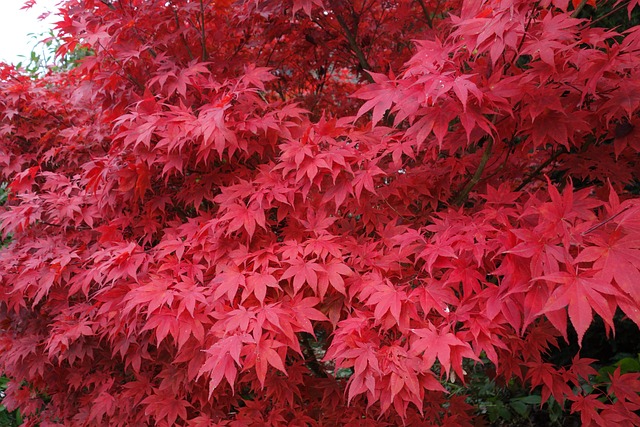
These trees are slow-growing, prefer partial shade, and thrive in well-drained, slightly acidic soil. They’re excellent for small gardens, containers, or as statement trees in landscaped areas.
🌿 2. Pink-Leafed Eastern Redbud (Cercis canadensis ‘Forest Pansy’)
This tree isn’t entirely pink, but it’s worth mentioning because of its spectacular spring display. The ‘Forest Pansy’ redbud starts with deep burgundy leaves that often appear pink or fuchsia in early spring, especially in bright light.
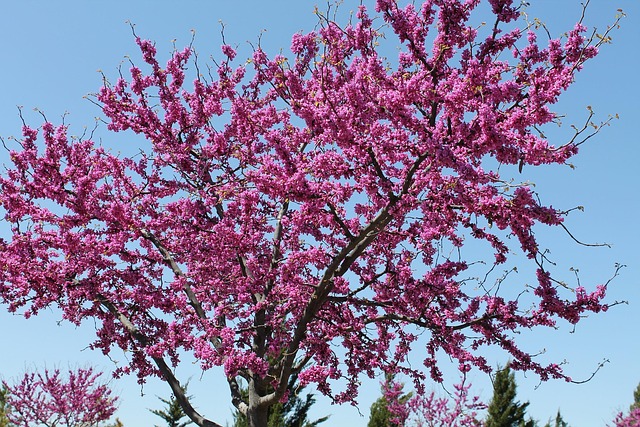
These trees also bloom with small, pink pea-like flowers on bare branches before the leaves even appear, making them a double delight in spring. They’re low-maintenance and grow well in most temperate climates.
🌺 3. Chinese Fringe Tree (Chionanthus retusus ‘Pink Panther’)
This lesser-known ornamental tree stands out with its soft, feathery pink new leaves that mature to green. The ‘Pink Panther’ cultivar is newer to the gardening world but gaining attention for its unusual coloring and attractive growth habit.
As a bonus, it also produces white fringe-like flowers in late spring. It prefers full sun to partial shade and can tolerate a range of soil types.
🍃 4. Tricolor Beech (Fagus sylvatica ‘Roseomarginata’ or ‘Purpurea Tricolor’)
The Tricolor Beech is one of the most stunning trees you can add to a formal garden. Its leaves are a blend of deep purple, green, and soft pink margins. In spring, the pink is most vivid, giving the tree an almost painted appearance.
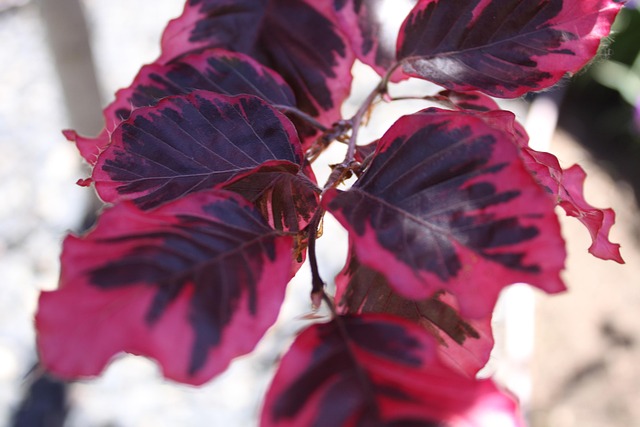
This tree is slow-growing and prefers cooler climates, moist soil, and partial sun. It’s ideal as a feature tree in larger gardens or estate landscapes.
🌸 Other Notable Trees with Pink Leaves
While the above trees are most commonly planted for their pink-toned foliage, there are several lesser-known or seasonal species that deserve a mention. These may show pink coloration only during certain stages of growth or in specific varieties.
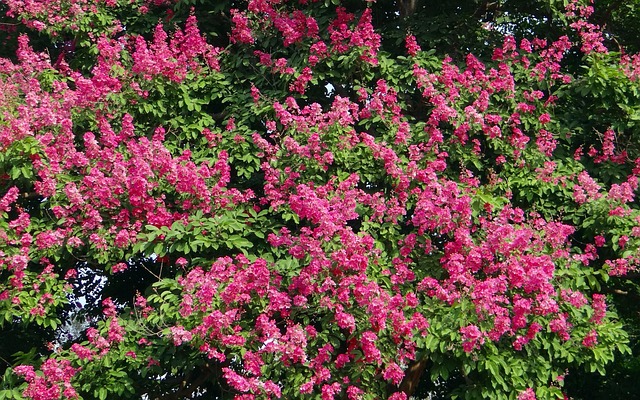
🌺 Crape Myrtle (Lagerstroemia indica)
Though best known for their flowers, some varieties—like ‘Pink Velour’—display reddish-pink new foliage in spring, which deepens to green over time. The tree also delivers spectacular pink blooms in summer and has attractive peeling bark. Ideal for warmer climates.
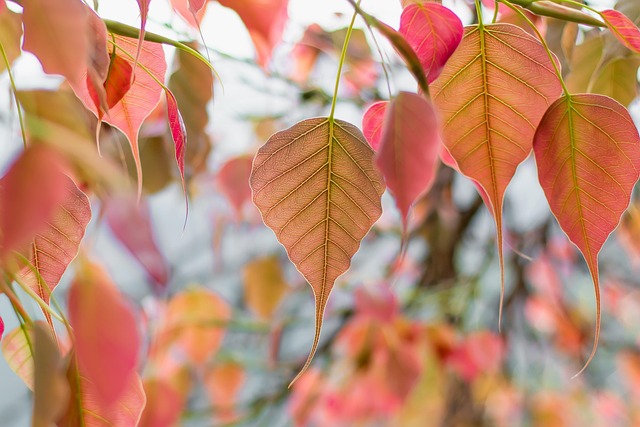
🌳 Pink Bodhi Tree (Ficus religiosa var.)
A rare ornamental variant of the sacred fig, the Pink Bodhi Tree features coppery-pink new growth that slowly matures to green. Most commonly grown in tropical or subtropical gardens, it prefers full sun and well-drained soil.
🌸 Flowering Dogwood (Cornus florida and Cornus kousa cultivars)
Primarily prized for their pink flowers, some Dogwoods also have pinkish-tinted new leaves, especially in spring. Varieties like ‘Cherokee Sunset’ feature variegated foliage with pink, cream, and green tones. Dogwoods thrive in partial shade and moist, acidic soil.
🍁 Staghorn Sumac (Rhus typhina)
Known for its bold, tropical-looking foliage, Staghorn Sumac puts on a fiery display in fall, with leaves often turning pinkish-red before falling. Though it’s more of a shrub or small tree, its striking leaf structure and color make it a great addition to wild gardens or naturalized areas.
🌿 Chinese Toons (Toona sinensis, aka Chinese Cedar)
This fast-growing deciduous tree produces young pink to bronze leaves that have a delicate, feathery look. In Chinese cuisine, young leaves are edible and fragrant. ‘Flamingo’ is a popular cultivar for its colorful foliage. Thrives in full sun and well-drained soil.
🍂 Spindle Tree (Euonymus europaeus)
While best known for its fall display and unusual pink fruit, certain spindle varieties also show reddish-pink fall foliage. Compact and versatile, they work well in hedgerows or as accent trees in ornamental gardens.
💡 Why Do Some Leaves Turn Pink?
The pink coloration in tree leaves typically comes from anthocyanins, pigments that also give red and purple shades. Unlike chlorophyll (which makes leaves green), anthocyanins protect young leaves from sun damage or temperature stress.
Some trees have genetically variegated leaves, where pink appears alongside green and white as part of the plant’s natural mutation. Seasonal changes, nutrient availability, and light exposure can all influence how vivid the pink color appears.
🌱 Tips for Growing Trees with Pink Leaves
- Light matters – Too much shade can dull pink coloring; too much sun can scorch delicate foliage.
- Soil health – Ensure good drainage and use compost or mulch to retain nutrients and moisture.
- Water consistently – Especially in hot months; avoid letting the soil dry out completely.
- Prune lightly – Remove dead or crossed branches, but don’t over-prune, as this can stress the tree.
- Watch for pests – Aphids and leaf miners can damage tender variegated foliage.
🌸 Final Thoughts
Trees with pink leaves add a splash of the unexpected to your landscape. Whether you prefer the romantic blush of a Japanese maple or the bold variegation of a Tricolor Beech, these trees are sure to draw attention and admiration.
As always, choose a tree that suits your local climate, garden size, and soil conditions. With the right care, your pink-leaved tree will thrive — and turn your garden into a living work of art.